Computational Biology
R2026bMathWorks® computational biology products provide tools to perform various analysis workflows for bioinformatics and systems pharmacology applications.
Build end-to-end bioinformatics pipelines using an app or at the command line and run these analysis workflows locally or in cluster environments. You can view and explore integrated next-generation sequencing (NGS) data using an app, identify differentially expressed genes or features, and discover copy number variants from NGS data.
Using integrated apps or at the command line, create and analyze dynamic models for quantitative systems pharmacology (QSP), physiologically-based pharmacokinetic (PBPK), and pharmacokinetic/pharmacodynamic (PK/PD) applications. For instance, you can run parallel simulations and parameter scans to assess target feasibility and characterize biological variability. You can also use local and global sensitivity analyses to identify key parameters and estimate model parameters with nonlinear regression and mixed-effects techniques. Then, share your work and models using autogenerated reports and deployed applications.
Products for Computational Biology
Bioinformatics Toolbox
Read, analyze, and visualize genomic and proteomic data
SimBiology
Model, simulate, and analyze biological systems
Topics
Next Generation Sequencing
- Count RNA-Seq Reads Using Biopipeline Designer (Bioinformatics Toolbox)
Create a bioinformatics pipeline to count RNA-Seq reads that are mapped to genomic features. - Visualize NGS Data Using Genomics Viewer App (Bioinformatics Toolbox)
View NGS alignment data for single nucleotide variation in cytochrome p450 gene. - Identifying Differentially Expressed Genes from RNA-Seq Data (Bioinformatics Toolbox)
Use a negative binomial model to test RNA-Seq data for differentially expressed genes.
Quantitative Systems Pharmacology
- Incorporate SGLT2 Inhibition into Physiologically Based Glucose-Insulin Model Using SimBiology Model Builder (SimBiology)
Update a glucose-insulin model to integrate sodium-glucose co-transporter 2 (SGLT2) receptor inhibition by a hypothetical compound. - Find Important Parameters for Receptor Occupancy with Global Sensitivity Analysis Using SimBiology Model Analyzer (SimBiology)
Perform GSA analyses, such as Sobol indices, elementary effects, and multiparametric GSA, to find important model parameters in a target-mediated drug disposition model. - Explore Biological Variability with Virtual Patients Using SimBiology Model Analyzer (SimBiology)
Generate sample values for model parameters to represent virtual patients, simulate to explore tumor growth variability, and investigate the effects of dosing regimens on tumor size.
PBPK and PK/PD Modeling
- Create Model of Receptor-Ligand Kinetics (SimBiology)
Create and simulate a simple receptor-ligand kinetics model using SimBiology apps. - Calculate NCA Parameters and Fit Model to PK/PD Data Using SimBiology Model Analyzer (SimBiology)
Calibrate model parameters by performing noncompartmental analysis and fitting to experimental PK/PD data using nonlinear regression. - Model the Population Pharmacokinetics of Phenobarbital in Neonates (SimBiology)
Perform nonlinear mixed-effects modeling using clinical pharmacokinetic data. - Estimate the Bioavailability of a Drug (SimBiology)
Fit a model of absorption and excretion of the drug ondansetron to estimate its bioavailability.
Featured Examples
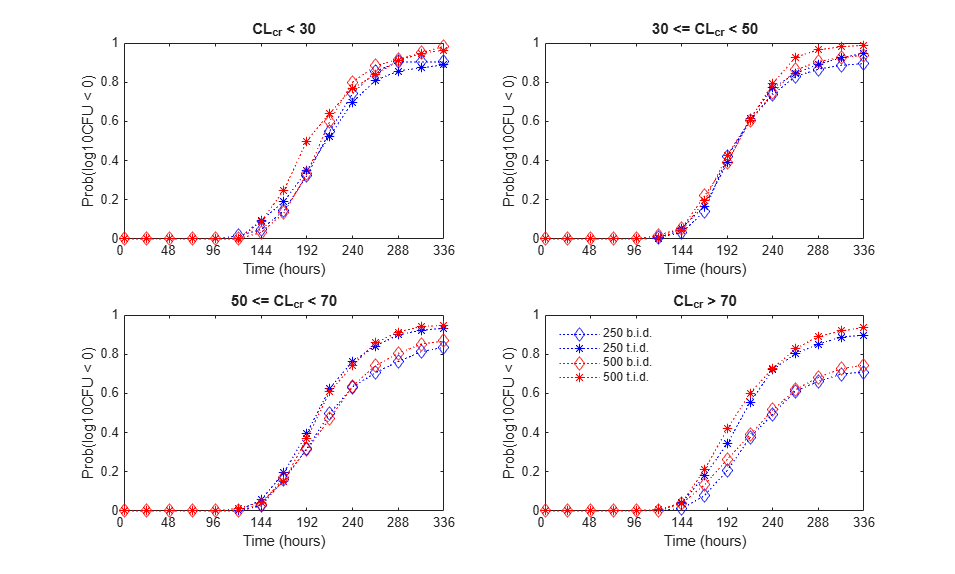
Perform PK/PD Modeling and Simulation to Guide Dosing Strategy for Antibiotics
Perform a Monte Carlo simulation of a pharmacokinetic/pharmacodynamic (PK/PD) model for an antibacterial agent. This example is adapted from Katsube et al. [1] This example also shows how to use the SimBiology® SimFunction object to perform parameter scans in parallel.
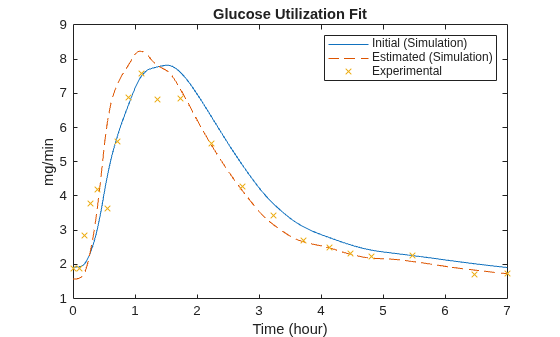
Simulate the Glucose-Insulin Response
Simulate and analyze a physiologically based glucose-insulin model for normal and diabetic patients.
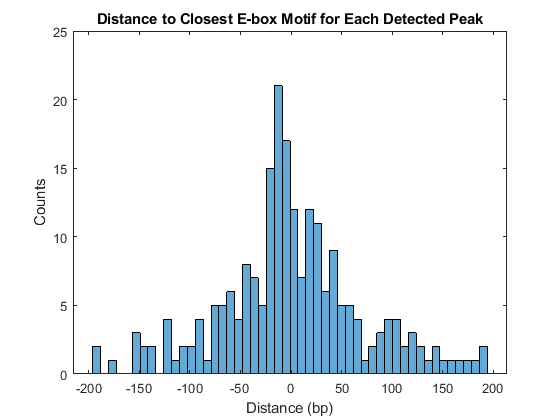
Exploring Protein-DNA Binding Sites from Paired-End ChIP-Seq Data
Perform a genome-wide analysis of a transcription factor in the Arabidopsis Thaliana (Thale Cress) model organism.
Videos
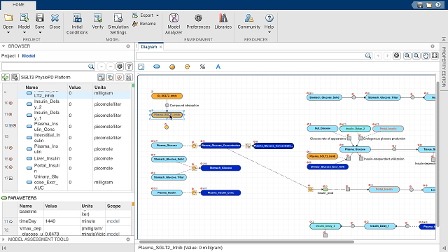
What Is SimBiology?
This video shows how to model, simulate, and analyze biological systems
and drug pharmacology using SimBiology.

Simulating a Model in SimBiology
This video demonstrates how to simulate a model in SimBiology using the
SimBiology Model Analyzer App.

Stratifying Data for Visualization in SimBiology
This video shows how to use the Model Analyzer app in SimBiology to
easily slice or stratify your experimental data and visualize simulation
results.

