slreq.modeling.find
R2026bDescription
Examples
Find the Requirements Table blocks in a model named
myModel.
reqTables = slreq.modeling.find("myModel");The function returns reqTables as an array of
RequirementsTable objects.
Get the handle of the current model.
modelH = get_param(gcs,"Handle");Find the Requirements Table blocks in the model named
myModel.
reqTables = slreq.modeling.find(modelH);
The function returns reqTables as an array of
RequirementsTable objects.
Since R2026a
This example shows how to return a specific Requirements Table block in a model.
Load the model spec_model_final. The model has two Requirements Table blocks.
model = "spec_model_final";
load_system(model);
The model has two Requirements Table blocks named AP_Mode_Determination and Cmd_Determination.
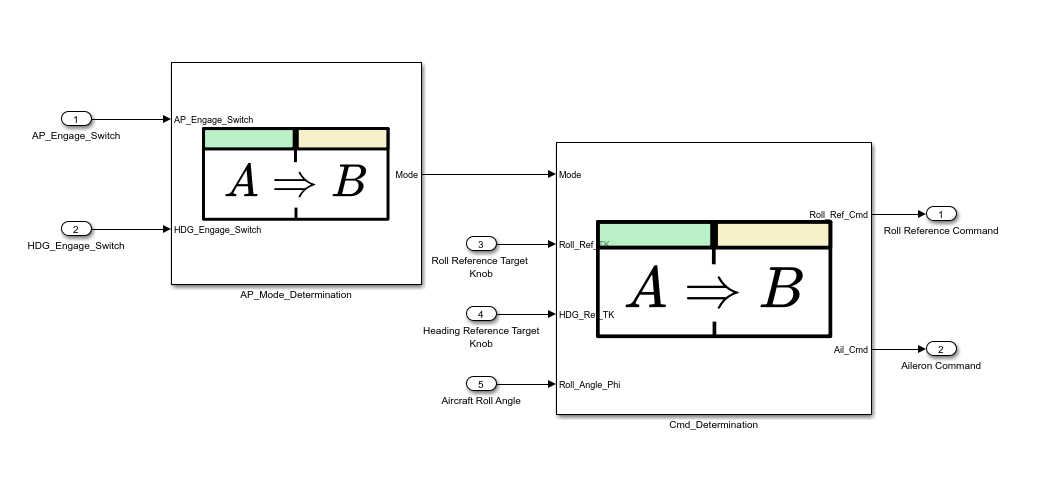
Get the AP_Mode_Determination Requirements Table block.
table = slreq.modeling.find(model,"AP_Mode_Determination")table =
RequirementsTable with properties:
Name: 'AP_Mode_Determination'
Path: 'spec_model_final/AP_Mode_Determination'
RequirementHeaders: [1×1 struct]
ChildEvaluation: 'independent'

